Honda blames excess cooling stress for Mexico power-unit failure
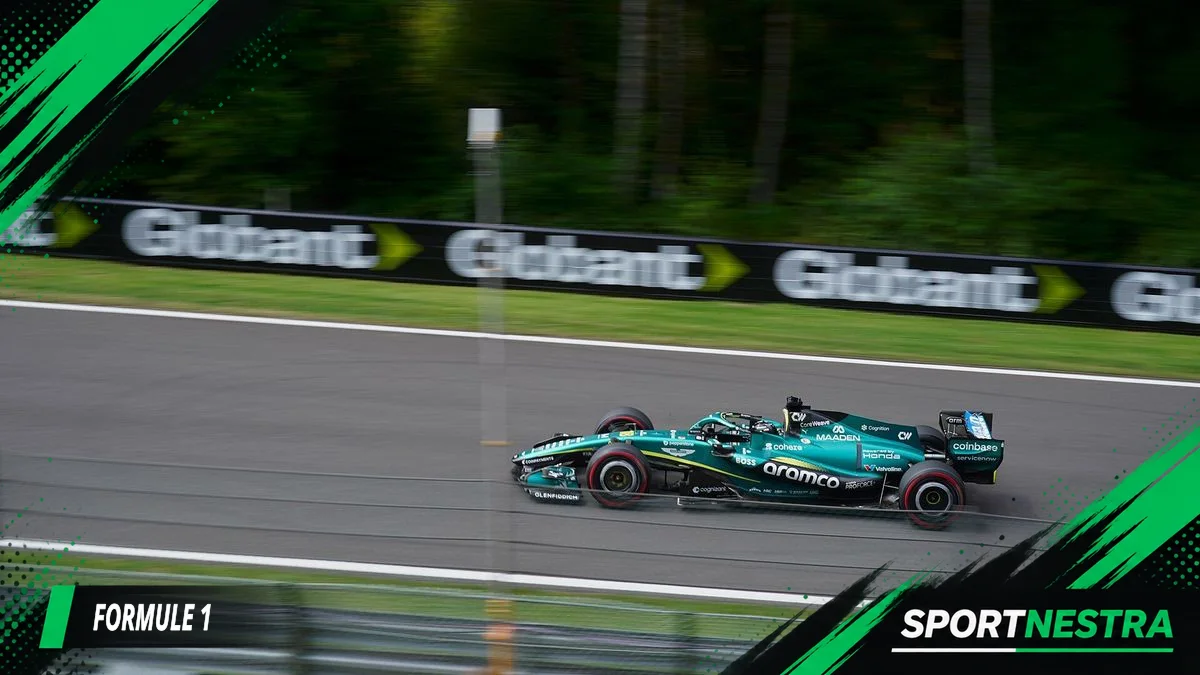
Photo: Der Alf, 2026 / Wikimedia Commons — CC BY 4.0, cropped and styled by SportNestra
Honda’s power unit lasted only five laps in the Mexico Grand Prix. After the race, Shintaro Orihara, Honda’s trackside general manager and chief engineer, said the ERS cooling system had come under more strain than expected. The problem had already appeared in several sessions, including qualifying, before returning on race day.
Honda had not been taken by surprise in every respect. In its Mexico Grand Prix preview, Orihara had described Autodromo Hermanos Rodriguez as “a very challenging track for the power unit”. He had also expected Mexico City’s altitude to make cooling more difficult. “We knew that the special high-altitude conditions in Mexico City would bring additional cooling challenges compared with other circuits,” he said after the race.
The team nevertheless found that the pressure on the ERS cooling circuit was greater than anticipated. “We found that our ERS cooling circuit was under heavier stress than anticipated, and this is why we had to stop the car in different sessions,” Orihara explained. The laps completed in practice did not prevent the issue from returning: he said it occurred in qualifying the previous day and again on race day.
The weekend had also brought driveability and turbo-lag difficulties. Honda addressed some of those problems between FP3 and qualifying. Fernando Alonso still reported “abnormal signals on the water systems” on Saturday afternoon. That did not stop him from outqualifying Lance Stroll, but both cars were eliminated in Q1, four tenths short of the Q2 cut-off.
The challenge was not limited to an isolated warning. Aston Martin chief trackside officer Mike Krack recalled that the team had discussed the circuit’s many low-speed corners before the event. He said competitiveness would depend in part on getting the car’s driveability under control in those sections, pointing to the stadium section and Turns 4, 5 and 6. Reliability problems, however, disrupted the programme even though Honda had managed to complete laps in practice.
Krack also described a season of contrasting fortunes: after a difficult start, the introduction of upgrades and ADUO brought better results, before reliability became a renewed source of trouble. He referred to separate incidents in Texas and acknowledged that maintaining motivation through such a difficult period was challenging. He nevertheless stressed the team’s commitment: “Everybody is doing their best and everybody is motivated to improve. I have no doubt about their motivation.”
Orihara said the experience must now help prepare the team for what comes next. “At each race this year, we need to learn for 2027, even the hard lessons,” he said. Honda plans to use the data gathered when it returns to the circuit the following year, including information on turbo lag, and to work on solutions. After a failure that limited its race to five laps, the task is to turn the problems encountered in Mexico into practical lessons for power-unit reliability.
This article was prepared with the help of artificial intelligence tools from the identified sources cited above, then put through automated checks (facts, figures, names, sources). Reported errors are checked and corrected. Our method
Follow SportNestra on FacebookFollow SportNestra on XReport this content
Related articles
- Russell speaks out after Antonelli’s title triumph2 November 2026
- Kimi Antonelli keeps hand-washing his Mercedes before every race2 November 2026
- Antonelli wants to frame a photo with Hamilton and Verstappen for his home2 November 2026
- Penalty drops Piastri out of the points at the Mexico Grand Prix2 November 2026
Comments